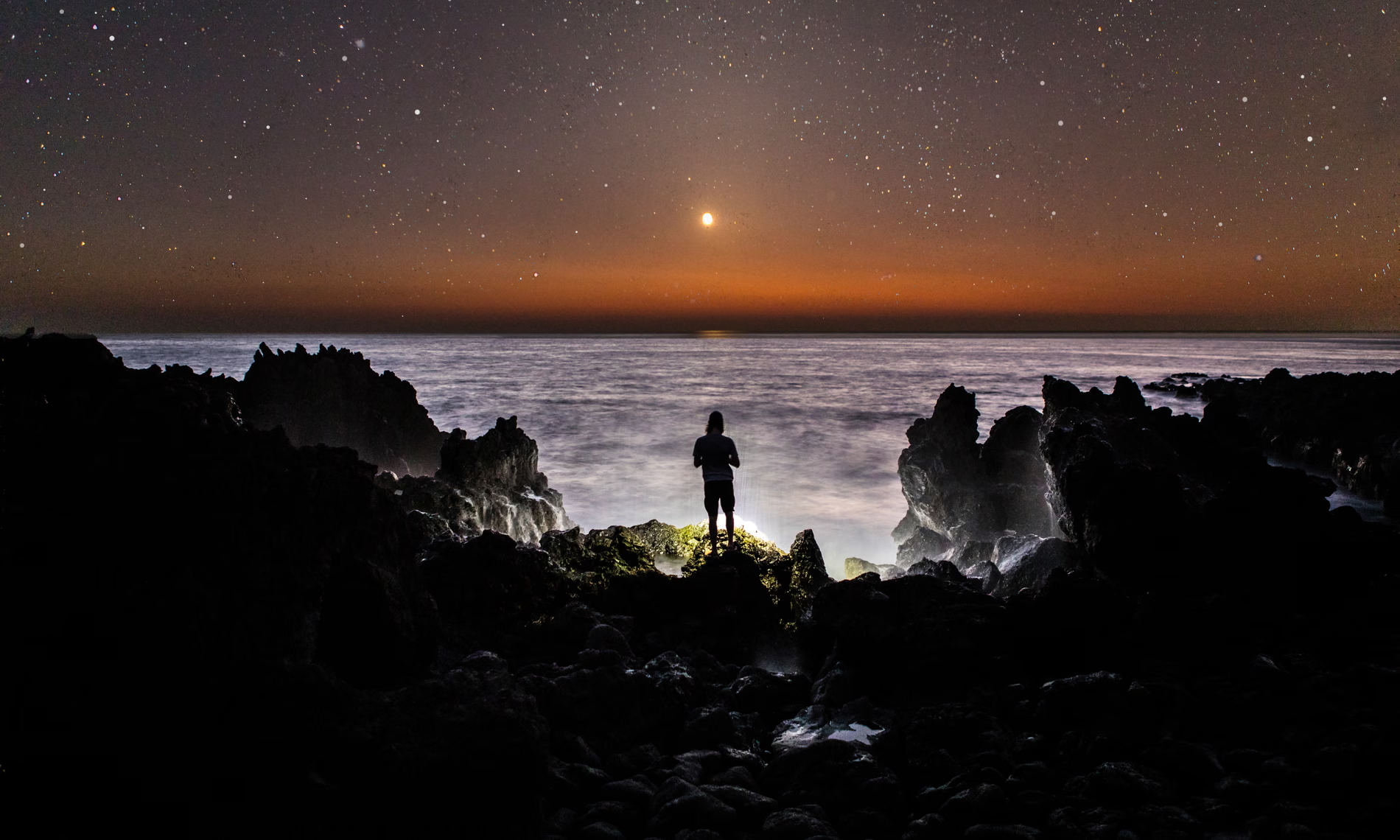
Star maps
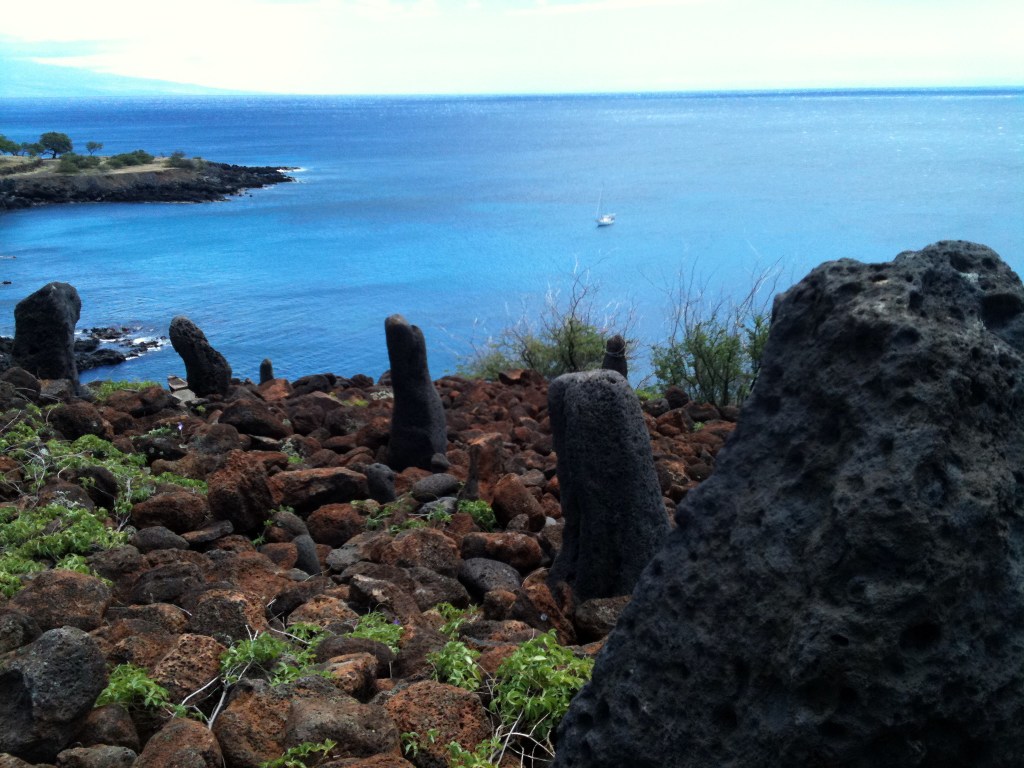
Hōlomoana
The heiau at Hōlomoana, located on the big Island of Hawaiʻi, is a sacred cultural site tied to Hawaiian celestial navigation and ocean voyaging traditions. Likely constructed by early Polynesian navigators, the heiau served as both a spiritual temple and a training ground for wayfinders who learned to read the stars, ocean swells, and natural signs to guide long-distance canoe voyages across the Pacific like the Kealaikahiki star-line.
Positioned near optimal vantage points for viewing the night sky and ocean horizon, the heiau is thought to have been used to align with key stars, such as those in the Makaliʻi (Pleiades) cluster and other guiding constellations central to Polynesian wayfinding. The site honors the spiritual and practical union between land, sea, and sky—embodying the philosophy that navigation was not merely technical but also sacred, guided by ancestral knowledge and cosmic relationships.
Today, the heiau at Hōlomoana stands as a testament to Hawaiian resilience, environmental wisdom, and spiritual connection to the ocean, echoing the legacy of voyagers who crossed vast seas with no modern instruments—only memory, discipline, and trust in nature.
Hawaiian Mythology, Makaliʻi (Pleiades)
In Hawaiian tradition, the Pleiades star cluster is called Makaliʻi, meaning “little eyes” or “little chiefs.” It plays a vital role in the Hawaiian lunar calendar and seasonal cycles, marking the beginning of the Makahiki season—a time of harvest, peace, and spiritual renewal dedicated to the god Lono. The rising of Makaliʻi just after sunset in the eastern sky signals the start of the new year in traditional Hawaiian cosmology.
Makaliʻi is also seen as a guiding constellation for ocean voyagers, and in some traditions, the cluster is linked to ancestral spirits or divine siblings watching over humanity. Its return each year is a reminder of nature’s cycles, spiritual balance, and the connection between stars, gods, and people.
This rhythm shapes the behavior of both the Nesoi and the human researchers, forcing them to time explorations precisely and respect the cycles that govern life on Hina. The moon’s periods of calm and chaos create natural metaphors for memory, emotion, and ancestral wisdom—sometimes serene, sometimes erupting.
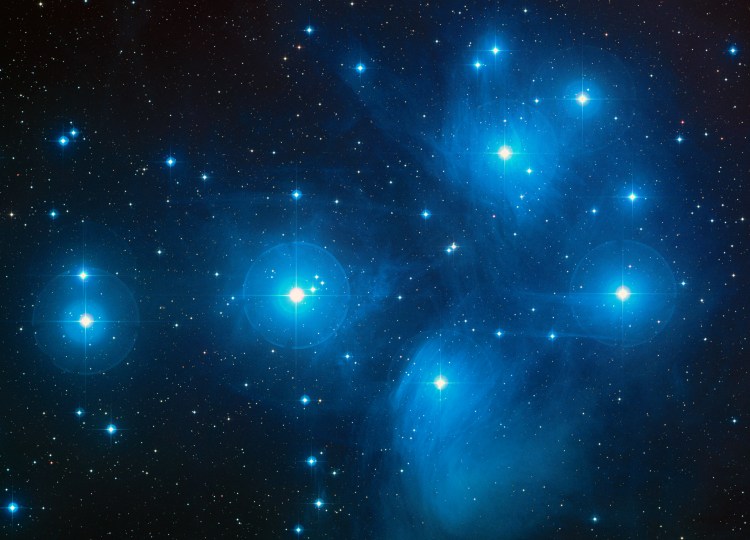

Australian Aboriginal Mythology, Seven Sisters
Among many Aboriginal cultures in Australia, the Pleiades are known as the “Seven Sisters” and feature in some of the oldest continuous stories on Earth. In these Dreaming stories, the sisters are often pursued across the sky by a male figure—usually represented by Orion (the hunter)—a tale that mirrors the movement of the stars across the night sky.
The Seven Sisters are associated with fertility, creation, and sacred women’s knowledge, and their travels across the sky are mirrored in ancestral journeys across the land. Their story is etched into songlines, rock art, and ceremonial traditions, forming a cosmic map that links star lore with earthly geography.
 Fires of Hina