
Songs of Thalassa
Musicology

Songs
Nesoi songs are more than communication — they are cultural memory, ecological wisdom, spiritual covenant, and emotional communion all in one. They link clans together, bind the living to their ancestors, harmonize with other species, and carry forward survival strategies. Ultimately, they embody the Allsong, the voice of Thalassa itself.
In Fires of Hina, the Nesoi songs are described as incredibly complex, layered, and spiritually resonant. Here’s a summary of the range of songs and their general meanings:
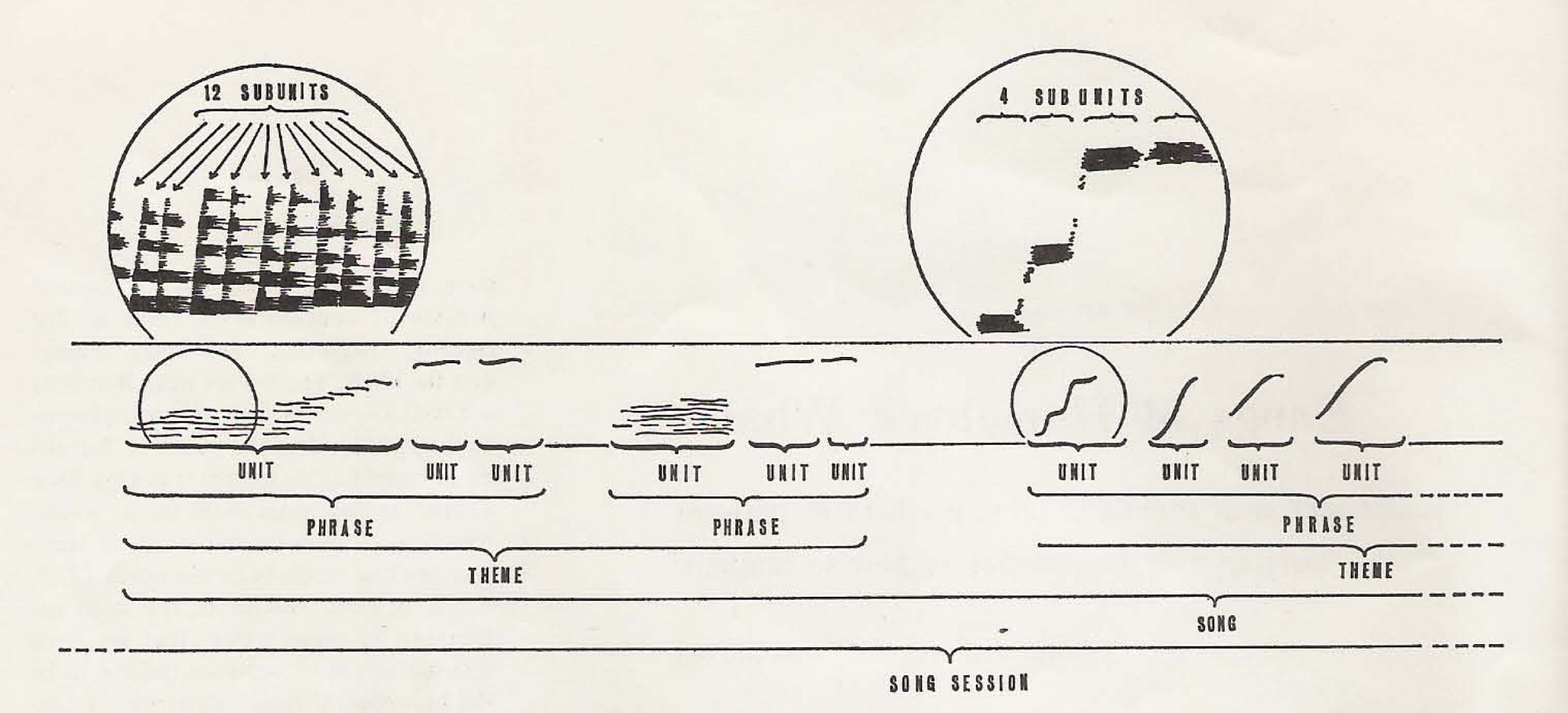
Song structure – Nesoi songs are built like human music: units (like words), phrases (sentences), themes (paragraphs), and full songs with verses, choruses, and codas. They perform not only solo ballads but also choruses, canons, and rounds, often blending with other species like the Ceti and Baleena, creating planetary-scale symphonies.
- Range and variety – Lani identified over 53 distinct songs, each with countless variations. Some span frequencies outside human hearing (ultrasound, infrasound), so that the music is not only heard but felt as vibrations in the body.
- Clan codas / Covenants – Each clan maintains a coda, a verse that encapsulates its wisdom, survival strategies, and spiritual essence. When sung together, these create the Covenant, a unifying song tradition that carries memory across generations.
- Ecological and survival songs – Songs include references to waves, rivers, prey species (pika, wiggles), predators (mantis squid, teethbane), and natural events (storms, eruptions). They encode ecological knowledge, hunting strategies, and warnings.
- Spiritual and ancestral songs – The Nesoi’s music often calls to ancestors and to other worlds. Choruses between Thalassa’s Nesoi and Hina’s clans show call-and-response cosmology: Hina calls, Thalassa answers. Their Covenant calls to the koholā (Earth’s whales), attempting to keep the ancestral bond alive.
- Emotional depth – Songs are windows into souls. They express love, grief, unity, resilience, and hope. They can soothe, guide visions, or invoke the sense of being “called home.” Many passages stress that the songs are not just sound but felt as soul vibrations, uniting listener and singer in shared awareness.
 Fires of Hina